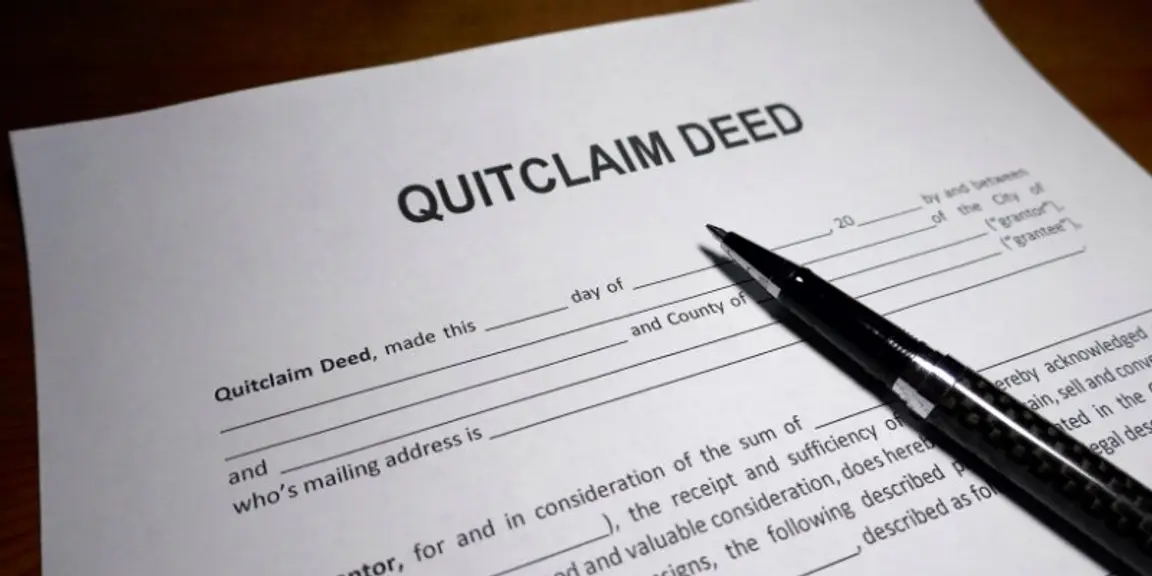


A couple from the South Hills neighborhood in Billings called me on a Tuesday morning, panicked. They’d inherited a property from a relative, the title was tangled between two names, and their closing was three weeks out. Nobody had told them about the Realty Transfer Certificate, and their attorney ended up scrambling to explain it the night before closing. They almost lost the sale over one form.
That’s the story with quitclaim deeds in Montana. The concept is simple. The execution trips people up, especially when they’re already stressed about everything else that comes with transferring real property.
This guide covers what quitclaim deeds do, when they make sense, what the state requires, what they cost, and what happens after filing. Montana’s median home sale price sat at $513,177 in May 2026, up 2.7% from the previous year, so getting this right matters more than ever. Whether you’re transferring property to a family member, removing a name after a divorce, or moving realty into a trust (I’ve done all three), here’s the complete picture.
What Is a Montana Quitclaim Deed and How Does It Work?
So you’ve got a property with a title problem, or a simple family transfer that needs to happen fast. A quitclaim deed is the tool most people reach for, and it works well, as long as they understand what it actually does and doesn’t do.
A Montana quitclaim deed is a legal form that allows the conveyance of real property from one person, called the grantor, to another, called the grantee. Unlike a warranty deed, it doesn’t include any guarantee from the grantor about the state of the title. The grantor transfers whatever interest they have, full ownership or fractional interest, cloud and all.
Think of it this way: a warranty deed is a promise. A quitclaim deed is just a handoff.
Real property transfers in Montana are governed by Title 70 of the Montana Code of Laws. Quitclaim deeds, while valid, aren’t specifically defined in the statutes; they simply transfer whatever interest the grantor may have, without any warranty of title. That absence of a warranty makes the deed flexible for family transfers but potentially risky in arm’s-length sales.
A deed becomes legally effective once it’s signed, notarized, and delivered to the grantee or the county recorder’s office. Recording it puts the public on notice that ownership changed hands and provides constructive notice to all subsequent mortgagees and purchasers under M.C.A. 70-21-302. Skip that step, and you leave the door open for competing claims.
All recorded documents affecting a change in ownership must state how the property will be vested. For Montana residential property, the two main methods for holding title are tenancy in common and joint tenancy. A grant to two or more persons is presumed to create a tenancy in common, so you’ll want to state joint tenancy explicitly if that’s what you intend, under M.C.A. 70-1-307 and 70-1-314.
That detail carries more weight than people expect. If you’re transferring to two siblings and want joint tenancy with right of survivorship, you have to say so explicitly. Leave it vague, and Montana defaults to tenancy in common, where each co-tenant holds an undivided interest with no right of survivorship.
Heirs of a deceased co-tenant inherit their share rather than it passing automatically to the survivor, an outcome that surprises plenty of families once they sit down with a probate attorney.
How Does a Montana Quitclaim Deed Differ From a Warranty Deed?

A landlord in the Lockwood area east of Billings came to me last year wanting to transfer a rental property to her adult son. Her first instinct was a warranty deed, since she’d heard that’s “the standard one.” A quick conversation made clear a quitclaim deed was the right call for a family transfer, since she already knew the title history well.
Distinguishing between the two comes down to guarantees. With a general warranty deed, the grantor promises the title is clean, that no one else has a claim on it, and that they’ll defend the grantee against title challenges that arise later, even ones predating their own ownership. That commitment covers the entire chain of title, not just the seller’s time of ownership.
A quitclaim deed makes no such promises. The grantor transfers whatever interest they currently hold, nothing more. If a lien surfaces two years after closing, or an unknown heir files a claim, the grantee has no recourse against the grantor under the deed itself.
For that reason, warranty deeds show up in traditional sales between strangers who need the protection. A quitclaim deed suits situations where the parties already trust each other, know the title history, or have title insurance to cover any gaps: divorce settlements, transfers into a living trust, adding a spouse to a title, and parent-to-child gifts all fit, which is why I’ve used one myself for an intra-family transfer without losing sleep over it.
Another practical distinction: lenders financing a purchase almost always want a warranty deed and a title policy. A quitclaim deed typically doesn’t satisfy that requirement, so using the wrong deed can derail a financed sale at the last minute.
Who Can Use a Montana Quitclaim Deed and When Does It Make Sense?
A seller had co-owned a Helena rental property for years after her divorce, her ex-spouse’s name still on the title, which made refinancing impossible. Within days of the quitclaim deed being signed and recorded, the property was solely in her name.
Quitclaim deeds work best when the parties involved have an existing relationship and a shared understanding of the title’s condition. Here are the situations where it makes the most sense:
Divorce and separation. When spouses split up, one party often transfers their share to the other. A quitclaim deed handles it efficiently, and spousal transfers aren’t subject to the federal gift tax.
Family gifts. Parents transferring a cabin near Flathead Lake to a child, or grandparents passing down land in the Yellowstone Valley, commonly use quitclaim deeds for their simplicity and low cost.
Trust and LLC transfers. Moving property from personal ownership into a revocable living trust or family LLC, where beneficial ownership stays the same, is a classic use case.
Correcting title defects. When an old deed misspelled a name or a prior owner needs to re-execute a defective transfer, a quitclaim deed cleans up the technical issue quickly.
Adding or removing co-owners. Whether you’re adding a new spouse to a title in Missoula or removing a business partner from a commercial parcel in Great Falls, a quitclaim deed gets it done without the warranty overhead.
Transfers to a spouse or a qualifying charity aren’t taxed, a meaningful benefit in a state where values have risen steadily. What a quitclaim deed isn’t designed for is a sale between strangers; using one in an arm’s-length transaction puts the buyer at real risk, and they deserve the protection only a warranty deed and a proper title search can provide.
What Are the Risks of Accepting a Montana Quitclaim Deed?
“If the title is clean, why do I need any warranty?” Fair question. You don’t know the title is clean until someone has searched it, and the deed itself doesn’t tell you.
Accepting a quitclaim deed means the grantee takes on the risk of any known or unknown problems with the property: a defect in title, collection liens, missing heirs, unrecorded easements, survey disputes, or a previous mortgage.
That list isn’t imaginary. In older Montana properties, especially rural parcels passed through multiple generations, title issues surface regularly: an easement that was never recorded, a sibling who was supposed to inherit a share but signed nothing, a mechanic’s lien from a contractor who worked on the property during a divorce.
A grantee who accepts a quitclaim deed without title insurance assumes all those risks personally; the grantor has no legal obligation to make them whole if something surfaces later. That’s meaningful exposure when homes in markets like Bozeman or Billings trade north of $500,000, and I’ve seen buyers absorb that surprise years after closing.
Mortgage lenders also refuse quitclaim deeds. If the grantee wants to refinance or take equity out later, the lender orders a full title search, and any lurking defect becomes their problem to resolve before the loan can close.
There’s also the capital gains issue on gifted property. Tax hits when the new owner eventually sells, and it’s often the biggest surprise with quitclaim deeds because it happens years later. The gain is calculated from what the original owner paid, not from the date of the gift. A child who receives a Billings home a parent bought decades ago for far less than today’s value could face a large taxable gain when they sell, because they inherit the parent’s original cost basis.
Why Does the Realty Transfer Certificate Trip People Up?
The Realty Transfer Certificate is the piece that blindsides people most often. It’s not the deed itself.
A Realty Transfer Certificate, the Department of Revenue’s Form RTC, accompanies every instrument evidencing a transfer, and the clerk and recorder won’t accept the deed for recording until it’s received. Even a perfectly drafted, notarized quitclaim deed doesn’t move forward without that companion form. The RTC captures the transaction details and discloses the water rights situation, which matters in a state where water rights carry real value.
What Information Must Be Included in a Montana Quitclaim Deed?
Forgetting the Realty Transfer Certificate isn’t the only mistake people make. The water rights disclosure built into the RTC is a separate obligation the grantor must sign, and missing it holds up recording just like missing the RTC itself.
Beyond the RTC, the deed must include several specific pieces of information to be valid and recordable: the current and new owner’s names and address on the first page, a valid legal description, the owner’s original notarized signature, and the spouse’s signature too, if the property is a married person’s homestead.
Both names must appear on the deed’s first or second page. If the current owner took title under a different name, the deed must include that prior name. Montana imposes a $50.00 penalty for leaving it out, so double-checking old title documents before finalizing is worth the effort.
Your legal description has to match exactly what appears on the prior recorded deed or the county assessor’s records. A street address alone won’t do; you need the metes-and-bounds or platted subdivision description. Getting this wrong can mean rejection or, worse, a recorded description that creates a title defect.
A return address for where the clerk should send the deed after recording must appear in the top left corner of the first page, a detail easy to overlook on a self-prepared form and one that costs you a rejection at the counter.
The consideration amount must also appear, even for a gift. Many people write “love and affection” or “$1.00” for a family transfer, which is legally acceptable in Montana, just stay consistent with what you report on the RTC.
Included in the Realty Transfer Certificate is a Water Right Disclosure. The grantor must sign under MT Code § 85-2-424. For rural parcels especially, this isn’t a formality: water rights in Montana are senior and can meaningfully affect property value.
What Are the Formatting Requirements for a Montana Quitclaim Deed?
A badly formatted deed doesn’t just get charged an extra fee. It can be rejected outright and delay a transfer that might have a closing date or legal deadline attached.
All Montana deeds must meet the state’s formatting standards: printed in black or blue ink on white paper, either 8½ × 11 inches or 8½ × 14 inches, with a 3-inch or larger top margin on the first page, reserved for the recorder’s stamp with no flexibility.
The statute also calls for 1-inch margins elsewhere on the page, the parties named on the first page, and the return address in the upper left corner.
The font must be at least 10-point and legible; handwritten deeds in faded pencil don’t make the cut. A standard laser or inkjet printer on plain white paper generally satisfies the ink color requirement.
As of October 1, 2025, the statewide recording fee is $20 for the first page and $10 for each additional page, plus an extra fee for a nonstandard document. Most quitclaim deeds run one to two pages, so the typical recording cost stays modest.
The grantee’s post-office address must appear in the deed itself; under Section 7-4-2618, the clerk and recorder are barred from accepting a deed without it. That’s a statutory hard stop, so if a family member forgets the grantee’s mailing address, the whole trip to the recorder’s office is wasted.
What Legal Requirements Must a Montana Quitclaim Deed Meet?

I used to think notarization was just the last formality before filing. Watching sales get held up because a grantor signed the deed before sitting down with a notary changed my thinking on that.
Do not sign or date the quitclaim deed as you fill it out. MT Code § 70-21-203 requires the deed be notarized, which means signing and dating it in the notary’s presence. Signing beforehand invalidates the notarization, since the notary can only attest to a signature they personally witnessed, and I’ve seen this simple rule send buyers back to square one at closing.
The quitclaim deed must be filed with the County Clerk and Recorder’s Office in the jurisdiction where the land is located, as specified in M.C.A. 70-21-201. The deed must be witnessed by a notary public upon the signature of the grantor, as required under § 70-21-203.
Montana doesn’t require witnesses beyond the notary, just the grantor’s signature acknowledged before a notary public. If the property is a married person’s homestead, the spouse must also sign, even if they’re not on the title.
Montana law requires completion of the Realty Transfer Certificate and may impose a penalty of up to $500 for failure to file, under M.C.A. 15-7-304 through 310. Skipping the RTC is the most common reason a deed gets sent back from the recorder’s window.
Once a Montana quitclaim deed is filed, it can’t be revoked unilaterally. If you change your mind, you’d need to execute a new deed transferring the property back, which depends on full cooperation from the person you just transferred it to. That’s why getting it right the first time matters.
What Does a Montana Quitclaim Deed Sample Look Like?
Get the form wrong, and the clerk hands it back. Get the legal description wrong, and it records, sits in the public record looking valid, and creates a title defect that only surfaces years later, when someone tries to sell or refinance. That second scenario is worse.
A properly completed Montana quitclaim deed follows a set structure. In the upper left corner within the three-inch margin zone sits the return-to name and address. Below that, the deed identifies the grantor by full legal name (including any prior names used to take title) and mailing address, and the grantee by full legal name and post-office address.
The body states the consideration, even if nominal, followed by granting language along the lines of: the grantor quitclaims and conveys to the grantee all right, title, and interest in the following-described real property in Montana.
The legal description follows. For a platted subdivision property in Billings, that means the lot, block, subdivision name, and county. For a rural parcel near Miles City or along the Yellowstone River, it may be a metes-and-bounds description running several lines. Pull it directly from the prior deed or the county assessor’s records; don’t paraphrase it.
After the legal description comes the vesting language, if multiple grantees are involved, specifying joint tenancy with right of survivorship (JTWROS) or tenancy in common. Skip it, and the default under M.C.A. 70-1-307 is tenancy in common, not joint tenancy.
The grantor’s signature line sits at the bottom, unsigned until they appear before the notary public. The notary acknowledgment certificate follows, with the notary’s seal and commission expiration date, and the completed Realty Transfer Certificate (Form 488 RTC) attaches as a separate document.
You can find compliant Montana quitclaim deed forms and the RTC on legaltemplates.net or deeds.com, where county-specific versions are available and get updated as statutes change.
How to File a Quitclaim Deed in Montana: Step-by-Step
Filing a quitclaim deed in Montana comes down to five steps, but each one has a sub-step that trips people up, and knowing where those traps are saves you a second trip across the state.
Step 1: Prepare the deed. Fill out the grantor’s full name (with any prior names), grantee’s full name and mailing address, the complete legal description pulled from the existing deed or assessor records, the consideration amount, and vesting language if multiple grantees are involved. Include the return address in the upper left corner. Do not sign yet.
Step 2: Complete the Realty Transfer Certificate. Form 488 RTC is available through the Montana Department of Revenue; fill out the transaction details and the water rights disclosure, which the grantor must sign. Have it ready before your notary appointment, since the clerk needs it with the deed, and showing up without it means rescheduling.
Step 3: Get the deed notarized. Bring your unsigned deed and government-issued ID to a notary public, sign and date it in their presence, and they’ll complete the acknowledgment certificate and affix their seal. Banks, UPS stores, and many title companies in Billings, Missoula, Bozeman, and Great Falls have notaries available during business hours.
Step 4: Record the deed. Take the notarized deed and completed RTC to the County Clerk and Recorder’s office in the county where the property sits, even if that differs from where you live, under MT Code § 7-4-2613(1)(a) and MT Code § 70-21-208. Pay the recording fee, get your receipt, and wait for the recorded deed to be returned.
Step 5: Update related records. Notify the county assessor’s office so that property tax records reflect the new owner. If the property is homesteaded, the new owner may need to re-file for any applicable exemptions in their name.
If you’re handling a sale alongside a property transfer and want a second set of eyes on the transaction, the team at Billings Homebuyers has worked through dozens of these situations. It can point you in the right direction.
Where Do You File a Quitclaim Deed in Montana, and Who Handles It?
People drive to their nearest courthouse expecting any clerk’s window to handle their deed. In a state as large as Montana, where many rural counties have just one office building serving the whole region, showing up at the wrong county means a wasted day.
Montana law puts the choice in one place: the deed must be filed where the land sits, per M.C.A. 70-21-201, not wherever you happen to live. A homeowner in Bozeman with a rental cabin in Flathead County needs to file with the Flathead County Clerk in Kalispell, not the Gallatin County office down the street.
Montana has 56 counties, each with its own Clerk and Recorder’s office: Yellowstone County records at the courthouse in downtown Billings, Cascade County’s office is in Great Falls, and Missoula County’s is on West Broadway.
Most offices are open Monday through Friday during standard business hours, but hours vary by county, so calling ahead before driving long distances saves a frustrating trip.
Some counties accept mailed filings: the original notarized deed, the completed RTC, payment for the recording fee, and a self-addressed stamped envelope for the return. Call the county office first to confirm their mail-in procedure.
The Montana Association of Counties maintains a directory of all county offices at mtcounties.org, a good starting point for confirming hours and fees before you make the trip.
How Much Does It Cost to File a Quitclaim Deed in Montana?
Twenty dollars gets your first page recorded.
Montana charges $20 for the first page and $10 for each additional page under MT Code § 7-4-2637, plus $10 more if the document misses the margin, ink color, or paper size requirements. A standard one-page deed costs very little; two pages run $30.
Montana doesn’t impose a state-level transfer tax or documentary stamp tax on conveyances, unlike many states that layer a percentage-based tax on top of recording fees. That leaves the recording fee as your only real cost, a relief when values are this high.
Attorney fees are separate. A real estate attorney in Billings or Missoula might charge a few hundred to over a thousand dollars, depending on complexity. For a straightforward family transfer with a clean title, self-preparation with a reputable form provider works fine. For disputes, unclear boundaries, or a divorce settlement, an attorney is worth every dollar, and I’ve never regretted that call when things got complicated.
Notarization costs a small fee at most banks and notary services in Montana.
The RTC itself has no separate filing fee; the recording fee on the deed covers the submission.
If a gift exceeds the annual federal gift tax exclusion of $19,000 per recipient in 2026, you must report it to the IRS on Form 709, though reporting doesn’t mean owing tax; it just counts against the lifetime exemption. For most Montana families, actual gift tax liability isn’t a real concern, but the filing obligation still exists.
What Happens to Title and Ownership After a Montana Quitclaim Deed Is Filed?
Recording isn’t quite the same moment as when ownership legally changes hands, and that mix-up trips up a lot of people.
After the grantor files the deed, title legally passes to the grantee. Recording doesn’t create the transfer. It perfects it and puts the world on notice. A signed deed delivered to the grantee completes the transfer, but recording is what protects them against later third-party claims.
With joint tenancy with right of survivorship, neither owner can sell their share without the other’s consent, and when one dies, their interest passes automatically to the survivor, bypassing probate. That’s why families in Montana use this structure for cabins and ranches they want to keep for generations.
Tenancy in common works differently: each co-tenant holds a defined interest, equal or split unevenly, and can sell, will, or encumber their own share without the other’s permission. When they die, their share passes through their estate rather than to the surviving co-tenant.
Once recorded, the grantee becomes the legal owner. Mortgage obligations stay with whoever signed the original loan; a quitclaim deed doesn’t transfer debt. Most mortgages have due-on-sale clauses the transfer could trigger, even between family, so talk to the lender before transferring mortgaged property.
How Do Montana Property Tax and Title Records Change After a Quitclaim Deed?
Once the deed records and the title changes over, the county assessor’s records don’t automatically update in real time. That gap matters.
The Montana Department of Revenue uses the Realty Transfer Certificate to update ownership records for tax assessment, which is why skipping it creates problems beyond the penalty. Without an updated record, tax bills keep going to the old owner, the new owner misses them, and the property accrues a delinquency under a name nobody’s watching, sometimes for years.
For that reason, after recording, the grantee should contact the county assessor directly to confirm the tax account has been updated, a short call or email in most counties. Yellowstone, Cascade, and Missoula County’s assessor offices all handle these updates quickly once the RTC comes through.
Reassessment rules vary across Montana; some counties reassess on a change of ownership, others follow a regular cycle. Contact your local assessor to learn how the transfer affects your assessment and whether the new owner needs to reapply for any exemptions.
A primary residence exemption or agricultural classification doesn’t transfer automatically with the deed; the new owner has to re-establish eligibility separately, or risk a noticeably higher bill come November.
Title insurance is worth addressing, too. The prior owner’s policy doesn’t transfer with a quitclaim deed, so a grantee wanting protection needs a new owner’s policy in their own name, issued after a current title search.
What is a Quiet Title in Montana, and When Do You Need It After a Quitclaim Deed?

A landlord in Laurel was splitting up assets from a decade-long marriage when we first connected. The title to her rental still reflected two names that hadn’t spoken in two years. She’d received a quitclaim deed from her ex-spouse, but a contractor lien on the property had never been resolved, and she just wanted it sold, and the chapter closed.
That’s where quiet title actions come in: a court proceeding where a judge declares who holds valid legal title, cutting off competing claims. It’s used when a quitclaim deed alone can’t resolve a dispute, since the deed only transfers whatever interest the grantor had, contested or not.
Common situations that require one: an heir receives a quitclaim from one sibling, but another disputes their authority to transfer; a mortgage or lien appears satisfied but was never formally released; or a prior deed in the chain had a defect that clouds the current title.
The process runs through Montana district courts: serving all parties who might claim an interest, publishing notice in a local paper, and obtaining a court order declaring the plaintiff’s title valid and superior. Expect at least several months, even for a straightforward case.
With the median days on market in Montana at 85 days in May 2026, a title cloud requiring a quiet title action before a sale can push the timeline out by months and cool buyer interest. Resolving title issues before listing, not after, is almost always the right order.
If your property has a title dispute, a contested transfer, or has passed through multiple hands with quitclaim deeds over decades, an attorney specializing in Montana property law is the right resource. The team at Billings Homebuyers regularly works with property owners in Yellowstone County dealing with exactly this, and can connect you with the right professionals.
Frequently Asked Questions
Can I File a Quitclaim Deed on My Own in Montana?
You can, and many people do: complete the deed form and the Realty Transfer Certificate, get the deed notarized, and file everything with the County Clerk and Recorder where the property is located. If the transfer is straightforward with a clean legal description and no competing claims, self-filing is reasonable. For disputed ownership, a divorce settlement, or known title defects, an attorney is worth the cost.
What Are Common Quitclaim Deed Mistakes in Montana?
Signing before appearing before a notary is the most common error, voiding the notarization. The second most common is forgetting the Realty Transfer Certificate, which gets the filing rejected at the counter. Others include a paraphrased legal description instead of the prior deed’s exact language, an omitted grantee mailing address, and missing vesting language, which defaults to tenancy in common when joint tenancy may have been intended.
Who Pays Taxes on a Quitclaim Deed in Montana?
Tax responsibility depends on the transfer. For a gift, the grantor is technically responsible for reporting it on IRS Form 709 if the value exceeds the annual federal exclusion of $19,000 per recipient for 2026. Montana has no state gift tax or property transfer tax. When the grantee later sells, they may owe capital gains tax on appreciation from the grantor’s original purchase price, not the gift date. Spousal transfers are generally not taxable.
Do You Have to Pay Taxes When You Sell Your House in Montana?
Montana doesn’t impose a state transfer tax on home sales, keeping costs lower than many other states. At the federal level, homeowners who’ve lived in their primary residence for at least two of the last five years can exclude up to $250,000 of gain ($500,000 for married couples) from capital gains tax. The exclusion doesn’t apply to investment or rental property, so a tax advisor can walk you through the specifics.
If you’re dealing with a property transfer in Montana and the title picture is getting complicated, or if you’d simply like to sell without the paperwork marathon, reach out to Billings Homebuyers at (406) 861-4229. They work with sellers in Billings, Yellowstone County, and communities across Montana, handle transactions where title complexity is part of the picture, and can give you a straightforward answer about your options. That local reach includes nearby markets too: sellers in Belgrade know us as the company that buys houses in Belgrade, MT, and homeowners near Columbus turn to us as the cash house buyers in Columbus, MT, whom they trust. No pressure, no obligation, just a conversation; contact us whenever you’re ready.
Helpful Montana Blog Articles
- Can You Sell a House With a Mortgage in Montana?
- How to Sell an Inherited House in Montana
- How to Do a Sale by Owner in Montana
- Can You Sell a House with Mold in Montana
- Can You Sell a House with a Lien in Montana?
- Selling a Probate House in Montana
- Can You Sell a House with Tenants in Montana
- Who Pays Closing Costs When Selling Your Montana Home
- Selling a House During Divorce in Montana
- Sell Your Fire-damaged Home Fast in Montana
- Paperwork Required For Selling Your House By Owner In Montana
- How to Sell a Hoarder House in Montana
- Selling a House that Needs Repairs in Montana
- Can the Seller Back Out of a Contract in Montana
- What It Costs to List on the MLS in Montana
- How To File A Quitclaim Deed In Montana
- Who Pays For Repairs After A Home Sale Closes