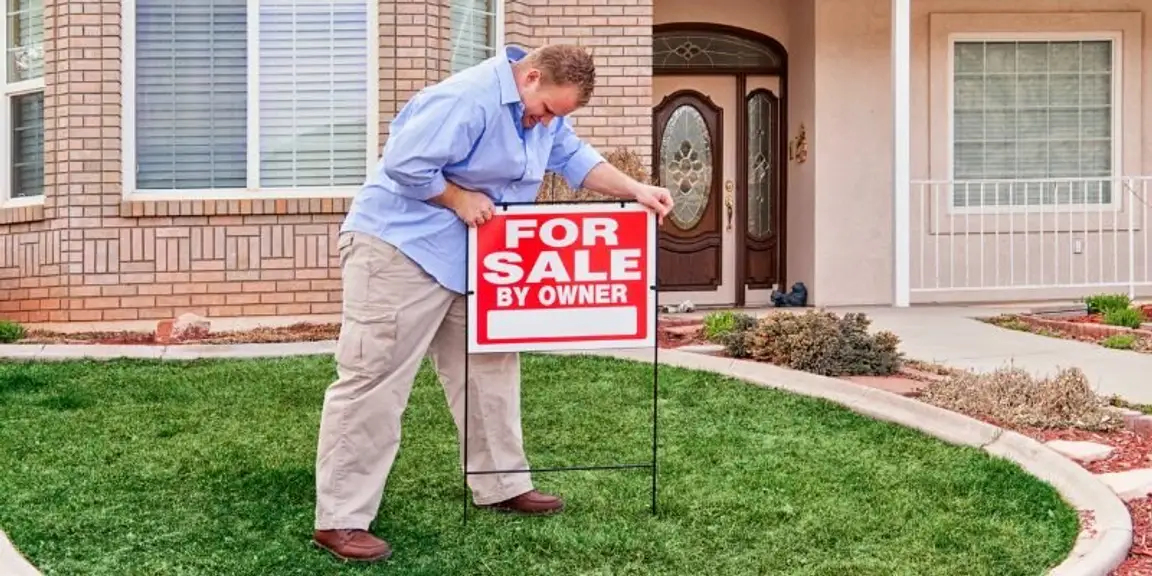


Most sellers sitting at their kitchen tables in Billings or Missoula think going FSBO means pocketing the full commission they’d otherwise hand to an agent. But the reality is more complicated. There are real costs, real tradeoffs, and a handful of surprises that catch sellers off guard every single time. This article breaks them down so you know what you’re getting into before you put that sign in the yard.
What Does “For Sale by Owner” Mean in Montana?

Selling FSBO in Montana is not a shortcut. It’s a decision to take on the full workload of a listing agent, a transaction coordinator, and a marketing manager, all at once, without the license or the system.
“For sale by owner” means you’re listing, marketing, showing, negotiating, and closing your property yourself, without hiring a listing agent or real estate broker to guide the process. You own every step. The appeal and the risk come wrapped together.
Montana gives FSBO sellers more room to operate than some states do. There’s no law requiring you to use a real estate attorney to close a residential sale. However, many title companies in cities like Billings, Great Falls, and Missoula routinely handle the closing process for a flat fee. The title company becomes your administrative backstop, handling the binding contract paperwork, title insurance, and funds disbursement at closing. In smaller communities like Havre or Miles City, the pool of title companies is thinner, which means you may have fewer choices on closing fees and turnaround times. It’s worth calling two or three title companies in your area before you list, so you understand what they charge and how long they typically take to process a transaction.
Montana is also a non-disclosure state, which matters more than most sellers realize. Sold prices in Montana can’t be posted publicly and are available only to MLS members. This creates a real pricing challenge for FSBO sellers who don’t have access to closed sales data. Without a comparative market analysis from a licensed agent or appraiser, you are merely guessing at the price. If you guess too high, the home remains unsold. Guess too low, and you’ve given away the money you were trying to protect. In practice, this scenario means a FSBO seller in, say, Laurel or Lockwood is working with far less market intelligence than the buyer’s agent sitting across the table from them at closing. This asymmetry has a dollar value, and it usually flows toward the buyer.
The Martinez family learned this lesson the hard way. They were trying to sell a three-bedroom ranch in the Billings Heights neighborhood, and two weeks ago, they called me after two separate agent listings had expired without a single offer. Both times, the pricing was off. Their home had been sitting so long that buyers assumed something was wrong with it. I’ve seen that pattern repeat more times than I can count. By the time we worked through the numbers together, the property had lost months of market time, and the carrying costs had eaten into what they’d hoped to save by going FSBO in the first place.
If you’re considering going FSBO, the question to ask yourself first is, “Do you have the time, pricing data, and patience to manage the process correctly?” Because the commission you avoid paying isn’t automatically profit. It has to be earned through execution.
Who Controls the Home Sale When You Go FSBO in Montana?
You do. Completely. No listing agent schedules your showings without asking. No agent informed buyers that your home was “as-is” before you agreed to that framing. I just wanted to let you know that no one is fielding lowball offers on your behalf while you’re at work. Every call, every text from a buyer’s agent, every showing request, every inspection negotiation, every counteroffer: yours to handle.
Control like that is worth something real, especially for sellers who’ve worked with agents who were too passive or who had too many listings to give proper attention. The best real estate agents in Montana are genuinely helpful. The average ones are not always worth the commission.
What most sellers don’t fully anticipate is the complexity of coordinating buyers, lenders, home inspectors, and title companies on their own timeline. Buyers walk away when an FSBO seller takes two days to respond to an offer. A buyer’s agent won’t chase you down. They’ll move their client to the next listing. Montana buyers shopping in markets like Bozeman’s Gallatin Valley or Kalispell’s Flathead County have choices right now, and a slow or unresponsive FSBO seller isn’t their only option. The practical fix is simple but requires discipline: set up a dedicated phone number or email for showing requests and offer inquiries, check it at least twice a day, and respond within two to four hours during business hours. This alone puts you ahead of most FSBO sellers.
You also control the disclosures. Montana requires sellers to complete a Seller Property Disclosure Statement covering material defects, water and sewer systems, environmental issues, and structural conditions. If you fail to disclose something and the buyer discovers it later, you’re personally liable, not a brokerage. This is a meaningful difference from agent-assisted sales, where the brokerage carries errors and omissions insurance that can absorb some of the liability when a disclosure goes wrong. As an FSBO seller, you carry that exposure directly, so it’s worth having a real estate attorney review your completed disclosure statement before you hand it to anyone.
The upside of control is real. The downside is that every mistake is also yours. Good FSBO sellers treat the process like a part-time job for two to three months. If you can’t commit that time, FSBO is going to cost you more than it saves. If you’d rather avoid the time commitment, there are other options that can help you sell your Montana house faster without managing every part of the FSBO process yourself.
FSBO vs. Traditional Agent Sales in Montana: What Is the Difference?
Agent-assisted sales in Montana routinely sell for more than FSBO sales, even after commissions are factored out. That gap is the part that most FSBO articles skip.
The median FSBO home sold for $360,000 nationally, compared to $425,000 for agent-assisted sales. Not all of that difference is attributable to agent skill. Some of it reflects the types of properties sold FSBO and the demographics of sellers using that route. But some of it is pricing errors, weak marketing, and poor negotiation, and in my experience, those mistakes tend to stack up rather than show up one at a time. All three are more common when a seller handles them alone.
In Montana specifically, the MLS is where buyers’ real estate brokers go to find inventory for their clients. FSBO sellers who don’t get their property onto the MLS are essentially invisible to the professional buyer pipeline. A home listed only on Facebook Marketplace and a yard sign in Missoula’s Rattlesnake neighborhood are reaching a fraction of the buyers who might otherwise compete over it. This is not a theoretical problem. In a market where multiple-offer situations still happen in well-priced Billings neighborhoods, leaving buyer’s agents out of the loop means fewer competing offers, less negotiating leverage, and a final sale price that reflects it.
Traditional agent listings also include professional photography as standard. Buyers form their first impression of a property online. Listings with poor photos, especially in markets like Whitefish or the Bitterroot Valley, where scenic surroundings are part of the appeal, perform measurably worse. Hiring a photographer for your FSBO listing costs $150 to $400 and is worth every dollar. For properties with acreage, mountain views, or waterfront access, drone photography adds $100 to $200 and can dramatically improve a listing’s first impression. Buyers relocating from out of state, a significant portion of Montana’s buyer pool, are making decisions largely based on what they see online before ever setting foot in the state.
Another meaningful difference: agents have access to comparable sales data and can prepare a proper comparative market analysis. FSBO sellers don’t get that automatically. They can pay for an appraisal (typically $400 to $600 in Montana) or use online tools that rely on public records, which, in a non-disclosure state, are incomplete. Automated valuation models like Zillow’s Zestimate are calibrated using sold price data. In Montana, that data is thin, leaving Zestimate accuracy worse than in disclosure states like Colorado or Washington. Treat any online valuation as a starting point, not a conclusion.
What types of FSBO websites are available to sellers in Montana?

Here’s what I’d say to someone sitting across from me who just asked: there are three kinds of sites, and only one of them actually moves houses.
The first type is the free listing site. Places like Craigslist, Facebook Marketplace, and Zillow’s FSBO portal let you post for free. They’ll get you some eyes. Not many serious buyers, because buyers working with agents won’t see these listings and won’t come back to show them. But for sellers in tight-knit towns like Livingston or Columbus who already know likely buyers, this approach can work. A seller in a town of 2,000 people taps a genuinely useful network by listing on Facebook and having the listing shared through a local community group. A seller in Missoula hoping to reach buyers relocating from Seattle faces a very different situation.
The second type is the dedicated FSBO platform. Sites like ForSaleByOwner.com and HomeFinder let you build a full listing with photos, descriptions, and contact forms. They charge anywhere from nothing to a few hundred dollars, letting you test the market without committing serious money upfront. The reach is better than a yard sign. Still limited compared to MLS exposure.
The third type, and the one that genuinely competes with traditional agent listings, is the flat-fee MLS service. For a set fee, these companies put your property directly onto your regional MLS, which then syndicates it to Zillow, Realtor.com, Redfin, and every other major platform that buyers and their real estate agents actually use. Your listing remains visible to the buyers’ agents who actually move the sale forward, letting them see it, show it, and write offers on it. Full market exposure at this stage is the most an FSBO seller can achieve without hiring a listing agent.
Montana FSBO sellers who care about price should be using a flat-fee MLS service. Period.
Best for Sale by Owner Websites in Montana and How Much You Can Save
The median sale price for a home in Billings in November 2025 was about $369,900, according to Redfin. On a home in that range, a traditional 5 to 6 percent commission would run somewhere between $19,000 and $23,000. That’s real money.
The most widely used flat-fee MLS services in Montana are Houzeo, ListSpark, and Beycome. Houzeo offers packages from $399 to $999, depending on how many changes you need to your listing and whether you want offers managed through their platform. It’s a fraction of what a listing agent charges. Houzeo’s higher-tier packages also include offer management tools that let you compare competing offers side by side, which is genuinely useful when you’re evaluating cash versus financed offers with different contingency structures. ListSpark tends to be more bare-bones but is priced accordingly, making it a reasonable choice for confident sellers handling their own documents and buyer communication.
FSBO.com and ForSaleByOwner.com are the best-known national FSBO platforms with reach in Montana. Packages vary widely: some are free with limited features, while others cost $100 to $400 for enhanced listings. They syndicate to partner sites but do not guarantee MLS placement without an add-on, which is particularly important in rural areas.
Zillow’s FSBO option is free and gives sellers access to Zillow’s enormous buyer traffic. The listing won’t appear in the MLS feed that buyer’s agents use, but it will show up for buyers browsing Zillow on their own. For a certain type of sale (think a paid-off rural property near Roundup or a cabin outside Lewistown where a cash buyer is already circling), this option is a reasonable tool.
About 75% of FSBO sellers still end up paying the buyer agent’s commission of between 2.5% and 3%. Sellers often forget these fees when calculating their savings. You’re not escaping all commissions, just the listing side. Budget for the buyer’s agent separately if you want to attract represented buyers. If you choose not to offer a buyer’s agent commission, be prepared for buyer’s agents to advise their clients that they’ll need to negotiate compensation directly with you, which adds friction to an already complex process.
How to Pick the Right FSBO Website in Montana
In smaller Montana communities, limited buyer demand can create similar challenges for sellers. If you’re exploring alternatives to listing on the MLS, cash home buyers in Manhattan may provide a faster path to selling without waiting for traditional buyers.
This story keeps repeating, and it raises one question: who actually sees your listing? If the answer is only retail buyers browsing on their own, you’re competing without the full field of buyers. The right site for most Montana sellers is the one that gets your property into the MLS, because that’s where agents bring their clients every single day.
After that, could you please think about what you need to do? Some flat-fee MLS companies offer legal forms, offer management dashboards, and provide access to yard signs and lockboxes. Others give you the MLS placement and nothing else. If you’re comfortable managing your documents and fielding buyer’s agent calls, the bare-bones service at a lower price point is fine. If you want a little infrastructure, pay for the mid-tier package.
Could you read the cancellation and listing-change policies carefully? Some services charge per listing change. If your pricing strategy shifts after week two (and for many FSBO sellers, it does), you don’t want to pay $25 every time you update the price. A service that allows unlimited price changes for a flat monthly or annual fee is worth the slight premium if you expect to test the market before settling on a final number.
Could you also confirm which MLS your property will be listed on? Montana has multiple regional MLS systems. A seller in Kalispell should be on the Northwest Montana Association of Realtors MLS, not a distant regional system. A seller in Bozeman needs to be on the Southwest Montana MLS. Ask the company directly which MLS covers your county before you pay, because some national flat-fee services have gaps in their Montana coverage, and finding that out after you’ve paid is a frustrating and avoidable problem.
If you want a second opinion on your pricing or an exit ramp if FSBO doesn’t pan out, Billings Homebuyers is a trusted local resource that works with sellers across Montana, regardless of how they initially tried to sell. If you’re wondering how we can help, take a look at our home-buying process to see what to expect from start to finish.
How Much Does It Cost to Sell FSBO in Montana?
What am I actually going to spend if I go FSBO?
That’s the first real question. And the honest answer is more than zero, less than a full agent commission, and the exact number depends on the choices you make along the way.
Seller closing costs in Montana range from 6.25% to 9% of the sale price. FSBO doesn’t eliminate closing costs; it eliminates (or reduces) the commission portion. The rest of the line items stay.
Title insurance is one cost sellers can’t skip. Owner’s title insurance in Montana runs from 0.5% to 1% of the property’s value. On a $500,000 home, that’s $2,500 to $5,000. The title company also charges an escrow or closing fee, ranging from $500 to $1,500, depending on the company and the transaction’s complexity. In rural areas where title companies are less competitive, closing fees can push toward the higher end of that range. It’s worth asking whether the title company charges a flat closing fee or a scaled fee based on sale price, because higher-value properties can make that difference matter enormously.
Home inspection costs are passed on to buyers in most Montana transactions, but sellers who do a pre-listing home inspection, which runs $300 to $500, tend to have smoother negotiations. Buyers come in with their own home inspector regardless, but a pre-listing inspection arms you with information before you’re in the middle of a sale. If the inspection turns up a cracked foundation, a failing septic system, or an aging roof, you can decide how to handle it before a buyer uses it as leverage to renegotiate the price or walk away entirely. That advanced knowledge is worth more than the inspection cost in most cases, and I’ve seen sellers avoid last-minute price cuts by addressing surprises early.
Flat-fee MLS fees, photography, yard signs, and any attorney- or title-company-prepared document fees can run $1,000 to $2,500 for a well-prepared FSBO seller. That’s a far cry from a standard listing commission, but it’s not free. I’d appreciate it if you could budget it realistically.
Some Montana sellers also agree to concessions at closing, covering the buyer’s closing costs or pre-paying repairs discovered during inspection. Those costs hit your net the same way they would in an agent-assisted sale, so don’t mentally exclude them from your FSBO math. Buyer closing-cost concessions of up to 2% of the sale price are common in Montana transactions, where buyers are stretching their financing (and FHA buyers stretch hardest). If your buyer asks for $5,000 in concessions on a $400,000 purchase, that’s a real reduction in your net proceeds, regardless of how you listed the home.
What paperwork do you need to sell a house FSBO in Montana?
Beyond the costs sits a stack of documents that has to be right, or the whole sale falls apart.
Montana’s Seller Property Disclosure Statement is non-negotiable. You fill it out, you sign it, and you give it to prospective buyers. It covers the home’s physical condition, any known defects, water rights, septic systems, underground storage tanks, and environmental hazards. Getting something wrong here, intentionally or not, creates legal exposure. Water rights, in particular, are a topic that trips up Montana sellers who aren’t familiar with the distinction between surface water and groundwater rights. If your property has any irrigation rights, stock water rights, or shares in a ditch company, those need to be disclosed and transferred correctly, or the sale can unravel at closing.
The purchase and sale agreement is your binding contract with the buyer. Once the agreement is signed, sellers may wonder, can the seller back out of a contract if circumstances change or they receive a better offer? Montana has standard real estate contract forms used statewide, but you’re responsible for filling them out correctly. This process is where FSBO sellers frequently run into trouble, particularly with contingencies, closing dates, handling earnest money, and what happens if financing falls through. An attorney review of the purchase agreement typically costs $200 to $500. It is worth considering for sellers handling high-value transactions, which, in my experience, are almost every rural property sale in this state.
Your title company will order a title search to confirm clear ownership and check for liens. If there are any unresolved liens, judgments, or property tax issues, they will surface here and must be resolved before closing. Please bring your most recent mortgage statements and any records of improvement permits to help keep the process moving smoothly. Unpermitted additions or outbuildings are a common issue on rural properties in Montana, and a buyer’s lender may require proof that the work was permitted or an as-built app before they will fund the loan.
Lead paint disclosures are required by federal law for homes built before 1978. Plenty of Montana’s older housing stock in neighborhoods like North Central Billings or older sections of Helena qualifies (and there’s more of it than sellers expect). Miss this disclosure, and you’re looking at federal penalties, not just a sale dispute.
How to Sell Your Montana Home on a For-Sale-By-Owner Site
Some sellers think getting listed is the hard part. Listing is actually the easy part.
The actual challenge is managing everything that happens after you’re live. Here’s a practical sequence that works.
Pricing comes first. You can pull every piece of public data you can find, look at active listings in your area, and if possible, pay a licensed appraiser for a formal opinion. A Montana appraisal costs a modest fee and removes the guesswork. Overpricing in a market where homes are already averaging 85 days on the market before going under contract isn’t a negotiating strategy; it’s a way to fund your holding costs. At a mortgage payment of $2,500 per month plus taxes and insurance, an extra 60 days on the market costs you $5,000 or more before you even get to the negotiating table.
Photos are second, not the listing itself. Could you hire a local photographer? For properties near natural landmarks like the Rimrocks outside Billings or the Beartooth foothills near Red Lodge, exterior shots matter a lot. Buyers are partly buying the setting. Show it.
Once you’re listed on your flat-fee MLS platform, respond to buyer’s agent inquiries within hours, not days. Set up a showing schedule and stick to it. A lockbox on the door and a professional sign in the yard signal to buyers that you’re serious. Could you make sure your showing instructions in the MLS are clear and specific? Buyer’s agents who can’t figure out how to schedule a showing will skip it and move on. Use a free showing scheduling tool like ShowingTime if your flat-fee MLS service offers it, or set up a simple Google Calendar link that buyer’s agents can use to book directly.
The National Association of Realtors publishes free consumer resources on the home-buying and selling process that can help you understand what buyers expect from a seller at each stage of the transaction.
When offers arrive, review the earnest money amount, the contingency timeline, and the financing type carefully. Cash offers close faster and carry less risk of the sale collapsing. Financed offers from buyers with a pre-approval letter from a solid lender are the next best thing. Please be careful about offers that include an unusually long inspection or financing contingency or a weak pre-approval because I’ve seen buyers use both as a pressure-free exit after stringing a seller along for weeks.
Pros and Cons of FSBO Websites in Montana

For years, I assumed FSBO sellers mostly struggled because they didn’t understand real estate. That’s not really what happens. The sellers who struggle most are the ones who don’t have time.
The pros are real. You avoid the listing agent commission, which, on a Montana home priced around $505,000, is between $7,500 and $15,000, depending on what you negotiate. You control your schedule. You’re in the room (or on the phone) for every conversation about your home. Nobody can speak for you or accept terms you haven’t reviewed.
FSBO websites give you MLS access at a fraction of the cost of full-service representation. Some platforms also offer document management, offer tracking, and offer e-sign capabilities that make the process cleaner than it used to be. The technology gap and offer between FSBO sellers and agent-assisted sellers has narrowed meaningfully over the past decade. A motivated FSBO seller in 2025 has access to tools that would have required a brokerage relationship ten years ago, making the process much more balanced than it was in the past.
The cons are equally real. FSBO sellers struggle most with pricing correctly (17%), selling on time (13%), and navigating paperwork (10%). Those aren’t minor hiccups; they’re the things that determine whether a sale closes at all. A 5% pricing mistake on such a home means $25,000 in lost sales or 6 months of dead-market time. I can tell you that neither outcome helps you.
Buyer’s agents sometimes steer clients away from FSBO listings, not because they’re forbidden to show them but because FSBO sellers occasionally make the showing and offer process difficult. Being professional, responsive, and easy to work with goes a long way toward overcoming that bias. One practical step: include a clear offer submission email address in your MLS listing and specify that you welcome buyer’s agent inquiries. That simple signal tells buyer’s agents you’re not going to make their job harder than it needs to be.
For sellers who want help without paying a full commission, Billings Homebuyers offers a direct cash purchase option that sidesteps the listing process entirely, removing most of these friction points.
Frequently Asked Questions
How Much Are Closing Costs for a Seller in Montana?
Seller closing costs in Montana range from 6.25% to 9%, depending on taxes, mortgage payoff, and other fees. The biggest piece of that is typically agent commissions, which you reduce or eliminate when going FSBO. The remaining costs, title insurance, escrow fees, prorated property taxes, and any concessions you offer buyers stay on your ledger either way. Budget at least 2% to 3% in unavoidable closing costs, even if you’re paying zero commission.
Is FSBO Worth the Effort?
It depends entirely on your situation. Sellers with strong local networks, time to manage the process, and a well-priced property in a market like Billings can absolutely come out ahead. Only 11% of FSBO sellers complete the sale without involving a realtor at any point in the process. That doesn’t mean you’ll fail, but it does mean you should have a backup plan if the listing stalls after 45 to 60 days. If you still have questions about selling your home, check out other frequently asked questions for additional help.
What Is the 3-3-3 Rule for Buying a House?
The 3-3-3 rule is a buyer’s budgeting guideline, not a seller framework. It generally refers to spending no more than three times your annual income on a home, using a 30-year mortgage, and keeping housing costs at or below 30% of your monthly take-home pay. As a Montana seller, knowing this helps you understand how your buyers are qualifying for financing and why a sharp price drop can open up your buyer pool.
What Are Common FSBO Mistakes?
Overpricing is the most common, and in Montana’s current market, with homes averaging around 85 days to sell, that mistake compounds quickly. After that, the most frequent errors are poor-quality listing photos, slow response times to buyers and their agents, incomplete or incorrect disclosure documents, and failing to budget for a buyer’s agent commission. Most sellers know they need to handle much of the process; what surprises them is the volume and the speed at which decisions must be made once showings begin.
Before I close this chapter, I want to mention Marcus Patel, a seller in the Rattlesnake neighborhood in Missoula, who called me on a Thursday about a property he’d been trying to FSBO for 2 months. The garage was packed wall-to-wall with a woodworking shop he’d built over 20 years, and he’d been storing the project cost estimates in a folder on his kitchen table. A contractor he’d hired to estimate a kitchen refresh came back with a number that exceeded the kitchen improvement’s impact on the sale price. Marcus had sunk two months and real money into a strategy that wasn’t working, and the contractor’s estimate was what made it click. He didn’t need to renovate. He needed a direct buyer who’d take the home as-is and let him move on.
If you’re in a similar spot, whether you’ve been trying to sell for a while or you’re just starting to map it out, you don’t have to figure this out alone. Billings Homebuyers works with homeowners across Montana and can walk through your numbers honestly, without pressure and without obligation. If a direct sale makes sense, they’ll tell you. If it doesn’t, they’ll tell you that too.
Helpful Montana Blogs
- Paperwork Required For Selling Your House By Owner In Montana
- How to Sell a Hoarder House in Montana
- Selling a House that Needs Repairs in Montana
- Selling Home with Reverse Mortgage in Montana
- Selling a House with Foundation Problems in Montana
- How to Sell a House with Title Issues in Montana
- Who Pays For The Appraisal And Inspection in Montana
- Selling a House With a Pending Lawsuit in Montana
- How Long Does It Take to Sell a House in Montana
- Selling Your Elderly Parents’ Home
- Can I Sell My House for Less Than Appraised Value
- How To Sell a Condemned House in Montana
- FSBO Costs in Montana